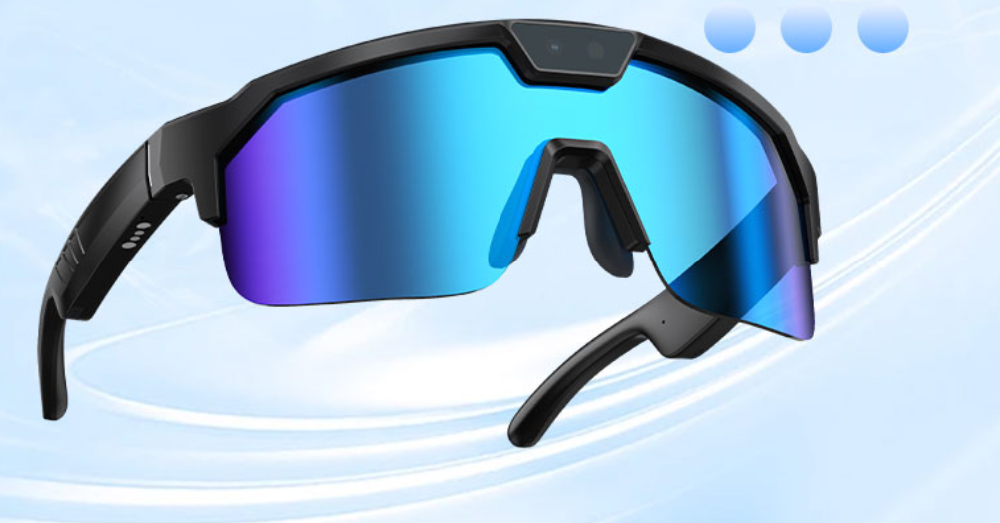
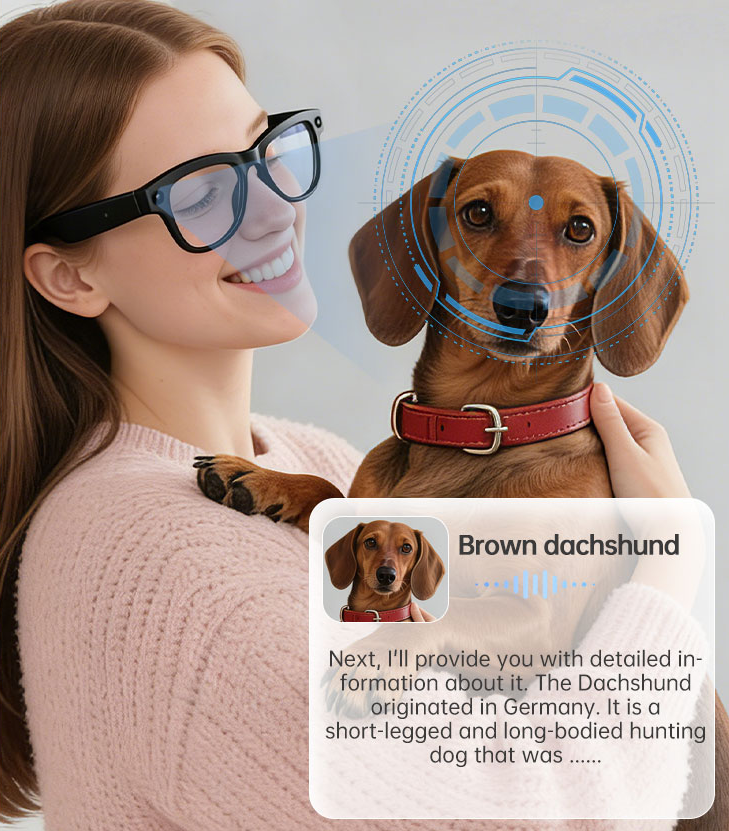
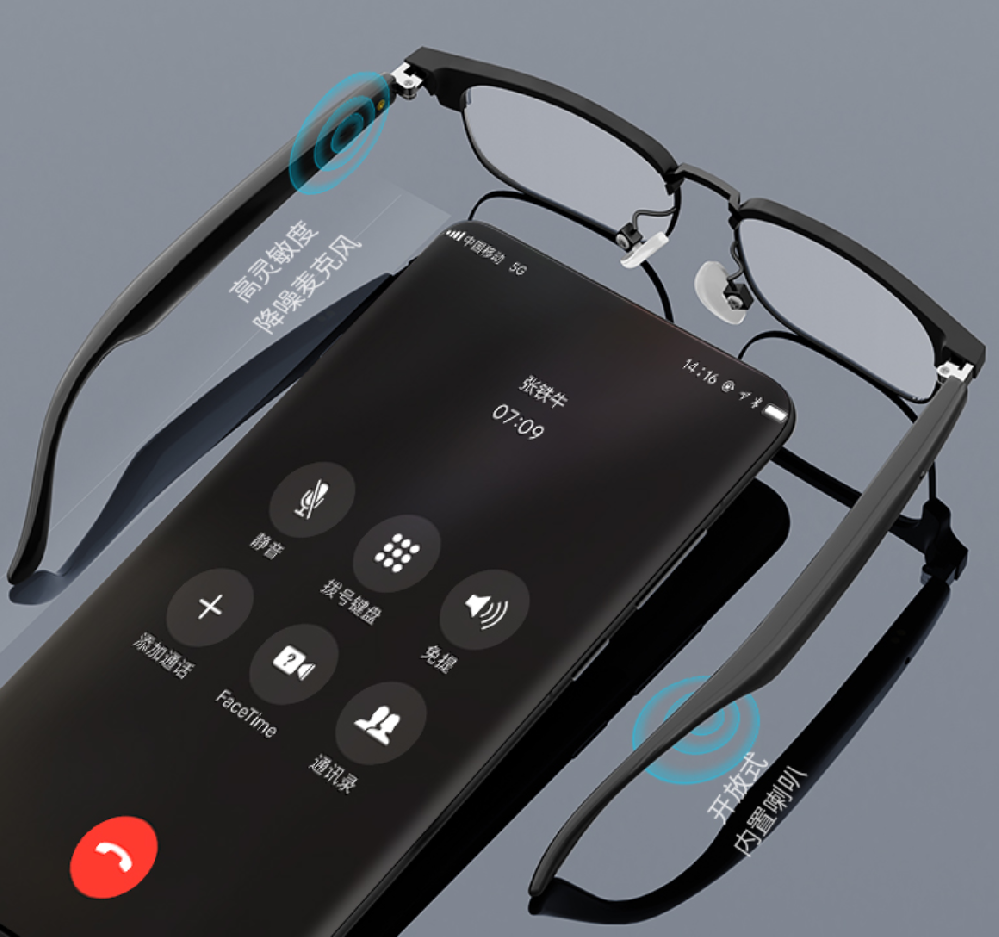
For importers, optical brands, and consumer electronics distributors, entering the smart eyewear market requires selecting the right display and audio architecture. While optical waveguide technology brings true Augmented Reality (AR) to life, Voice AI audio-only frames offer immediate mass-market adoption due to lower BOM costs and lighter ergonomics.
Understanding the technical trade-offs between these two hardware paths is essential before investing in tooling or inventory.

1. Technical Architecture Comparison
Smart eyewear hardware generally falls into two distinct categories based on user experience and component density:
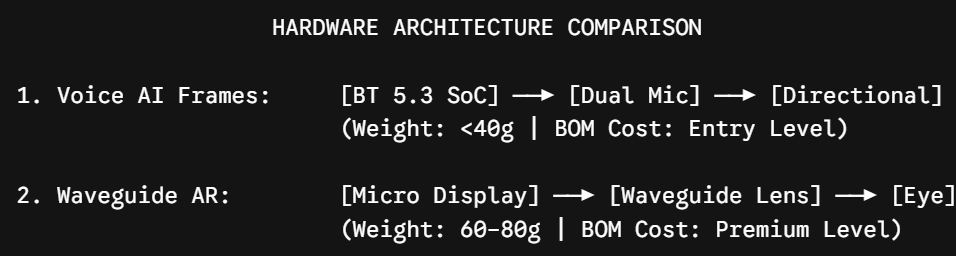
Path A: Directional Voice AI Smart Glasses (Audio + Mic Array)
Optical System: Standard TAC polarized, blue-light blocking, or custom prescription optical lenses. No visual display.
Core Interaction: Hands-free voice commands via integrated dual microphones connected to smartphone LLMs (ChatGPT, Claude, or proprietary voice engines).
Key Strengths: Ultra-light weight (35g–42g), extended battery life (5–7 hours active), lower unit cost, and standard eyewear aesthetics.
Path B: Optical Waveguide AR Smart Glasses (Diffractive / Reflective)
Optical System: MicroLED or MicroOLED engine combined with optical waveguide lenses, projecting heads-up visual info (navigation, teleprompter, translation).
Core Interaction: Visual display paired with touch or voice input.
Key Strengths: Immersive visual experience for specialized enterprise or high-end tech enthusiast segments.
2. Hardware Specification Matrix for B2B Sourcing
| Metric / Feature | Voice AI Audio Glasses | Optical Waveguide AR Glasses |
| Average Frame Weight | 35g – 42g (Daily Wearable) | 60g – 85g (Front-Heavy) |
| Active Battery Life | 5.5 – 7 Hours | 1.5 – 2.5 Hours |
| Lens Customization | Standard Optician Fitting | Specialized Optical Assembly |
| Target Retail Price | $79 – $199 USD | $399 – $899 USD |
| Manufacturing Yield Rate | > 95% | 70% – 80% (Optical Calibration) |
| Primary Use Cases | Voice AI, Calls, Music, Navigation | Navigation, Enterprise AR, Teleprompter |

3. Which Hardware Path Suits Your Brand Strategy?
Choose Voice AI Smart Glasses If:
Your sales channels target mass consumer markets, retail optical stores, or e-commerce platforms (Amazon, Shopify, TikTok Shop).
Your customers demand all-day comfort, prescription lens compatibility, and seamless daily wearability.
You want faster time-to-market with lower minimum order quantities (MOQs) and proven production yields.
Choose Optical Waveguide AR Glasses If:
You are targeting specialized industrial applications (medical, enterprise logistics, technical maintenance).
Your brand positions itself exclusively in the premium consumer tech segment where high retail pricing is accepted.
💡 Looking to test the market with reliable hardware?Our factory offers white-label Voice AI frames with quick-turn customization, as well as OEM optic development for Waveguide systems.
📩 [Request Sample Units & Detailed BOM Specifications]