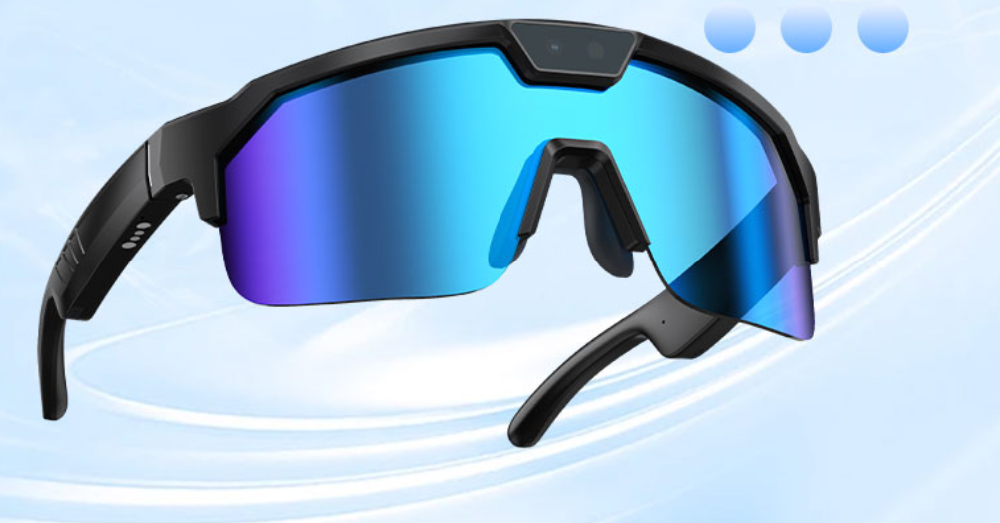
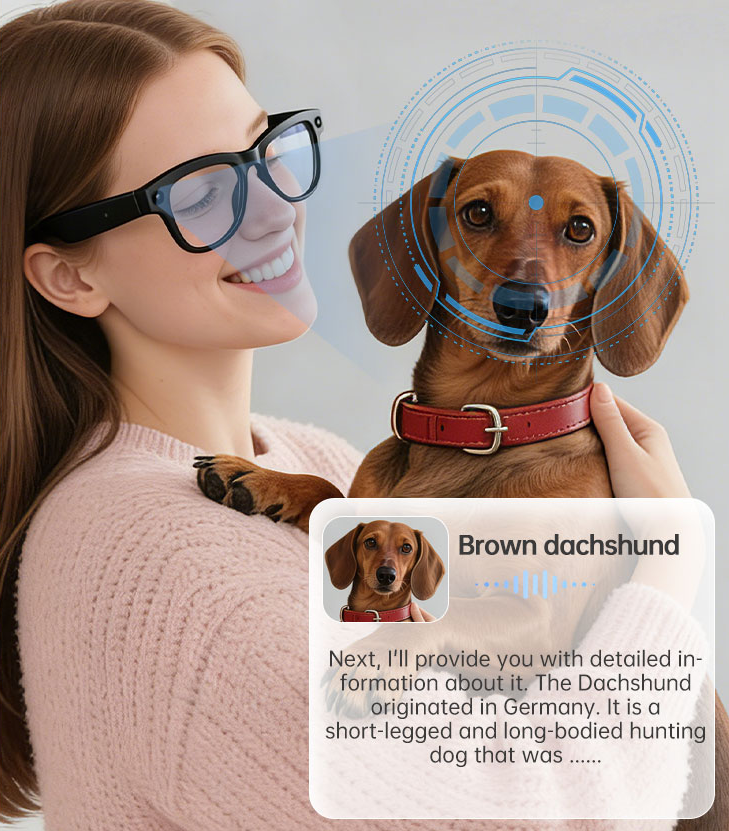
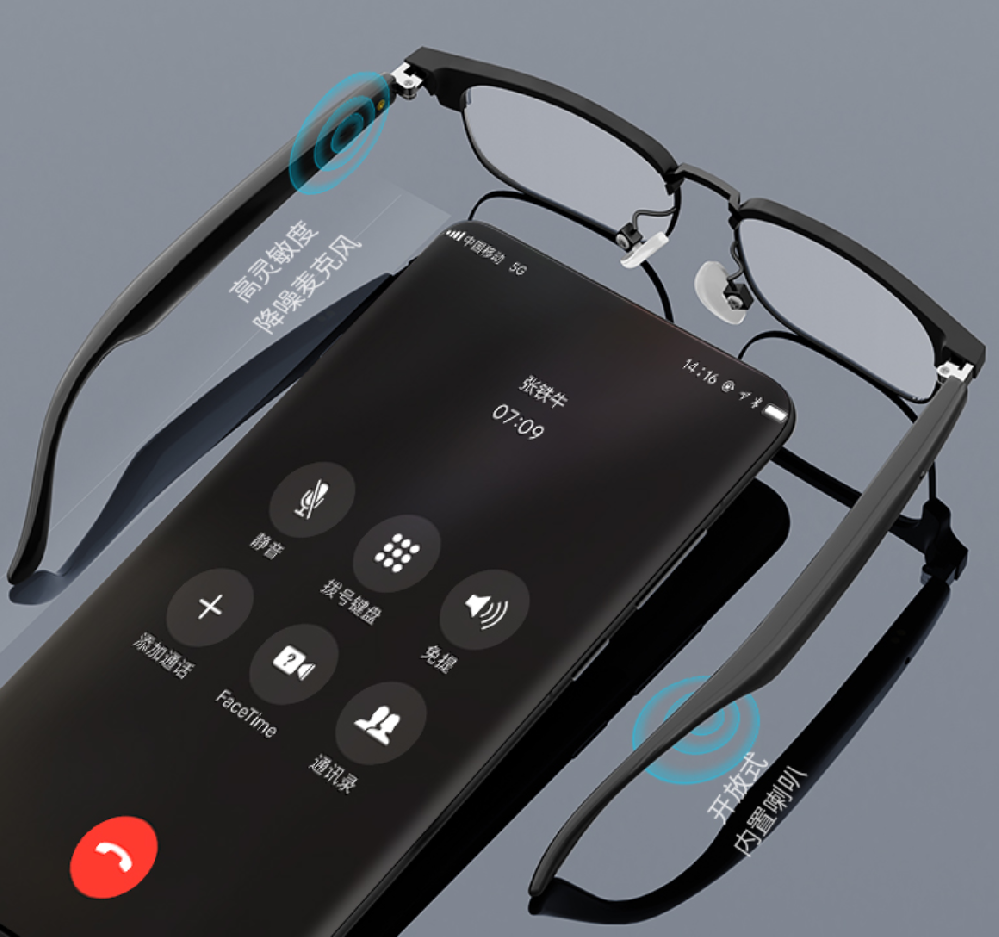
Manufacturing smart glasses requires balancing electronics, optics, and traditional eyewear craftsmanship. Unlike standard Bluetooth headphones, smart glasses require fitting PCBA boards, micro-batteries, touch controls, and acoustic chambers into temple arms measuring less than 4.5mm in thickness.
Here is a breakdown of how a professional OEM/ODM production line converts an initial frame design into a market-ready product.
Structural Workflow of OEM/ODM Production
Step 1: Industrial Design (ID) and Structural Engineering
The primary point of failure in smart glasses is weight distribution. If the temple arms are back-heavy or front-heavy, the glasses slip during movement.
Material Selection: High-grade TR90 polymer or ultra-light Swiss Grilamid materials are selected for the front frame to maintain flexibility, while titanium-alloy hinges provide structural integrity over 10,000+ open-close cycles.
Watertight Sealing: Precision silicone gaskets and sonic bonding are used around battery compartments to achieve IPX4 water and sweat resistance.
Step 2: Flexible PCBA Layout and Battery Placement
Space inside temple arms is extremely restricted. Electronics are separated across both arms to balance weight evenly:
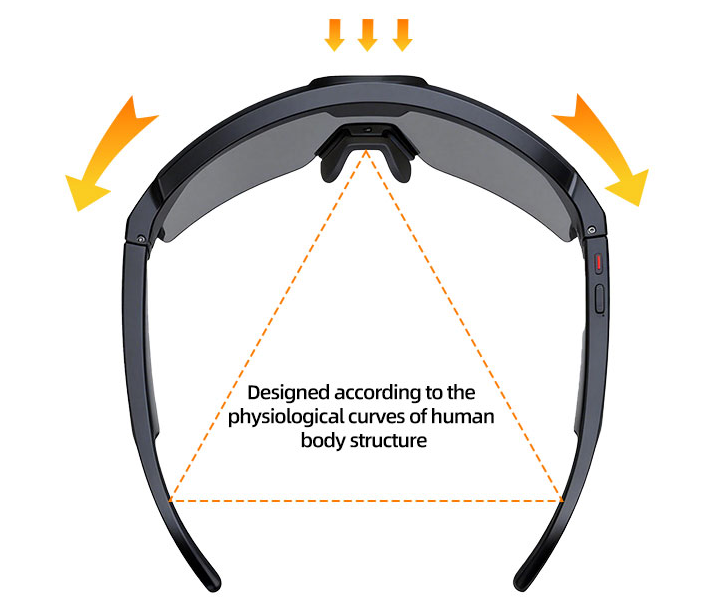
Left Arm: Rechargeable lithium-polymer battery (typically 80mAh – 110mAh) with dedicated BMS (Battery Management System) protection board.
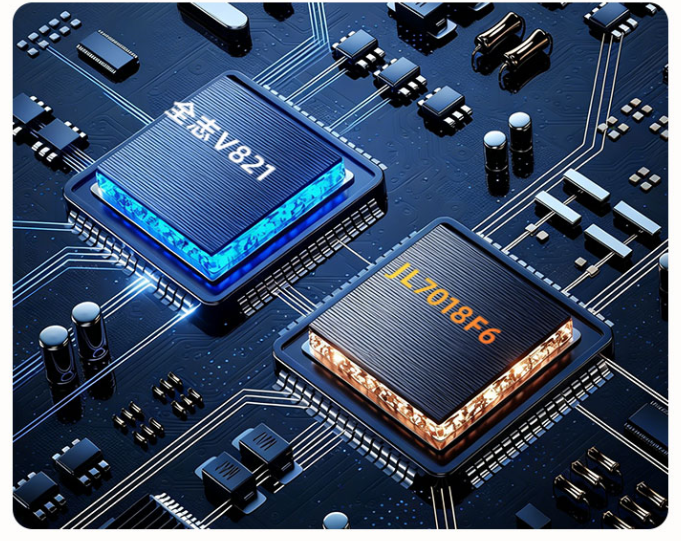
Right Arm: Main chipset, dual microphones, Bluetooth antenna, and capacitive touch sensor.
SMT Precision: High-density Surface Mount Technology (SMT) with 0201 component sizes is necessary to keep PCB footprints compact without overheating during extended audio usage.
Step 3: Directional Acoustic Engineering & Leak Prevention
Open-ear audio faces a major challenge: sound leakage. If a user is on a private phone call, people standing nearby should not hear the conversation.
Reverse Sound Wave Cancellation: Secondary acoustic ports are engineered into the top of the temple arms. These ports emit anti-phase sound waves that cancel out airborne sound spill without reducing sound clarity at the ear canal.
Acoustic Chamber Design: Sealed internal speaker cavities prevent internal vibration from rattling the electronic components or interfering with the microphones.
Step 4: Quality Control & Testing Thresholds in Mass Production
During assembly, each unit undergoes multi-stage functional testing before packaging:
Frequency Response & THD Check: Evaluated in an acoustic chamber to ensure speaker total harmonic distortion remains under 3%.
Hinge Endurance Stress Test: Automated mechanical arms flex the hinges out and in for 10,000 continuous cycles under thermal load.
RF Wireless Range Test: Verifies stable signal transmission across a 10-meter line-of-sight range.
Technical Customization Scope for OEM/ODM Orders
For custom B2B orders, customization involves three distinct layers:
Hardware & Aesthetics: Custom frame colorways, matte/gloss surface coatings, laser-etched brand logos, and specialized lens tints.
Firmware & Software: Custom Bluetooth pairing names (e.g., YourBrand-Glasses), localized voice prompts, and custom capacitive touch sensor mapping.
Packaging & Accessories: Branded retail boxes, custom hardshell travel cases, magnetic charging cables, and multi-language user manuals.
🛠️ Looking for a source manufacturer for your smart glasses project?We operate in-house SMT production lines and assembly facilities to ensure quality and control costs.
📩 [Request Technical Specs & Factory Audit Documentation]