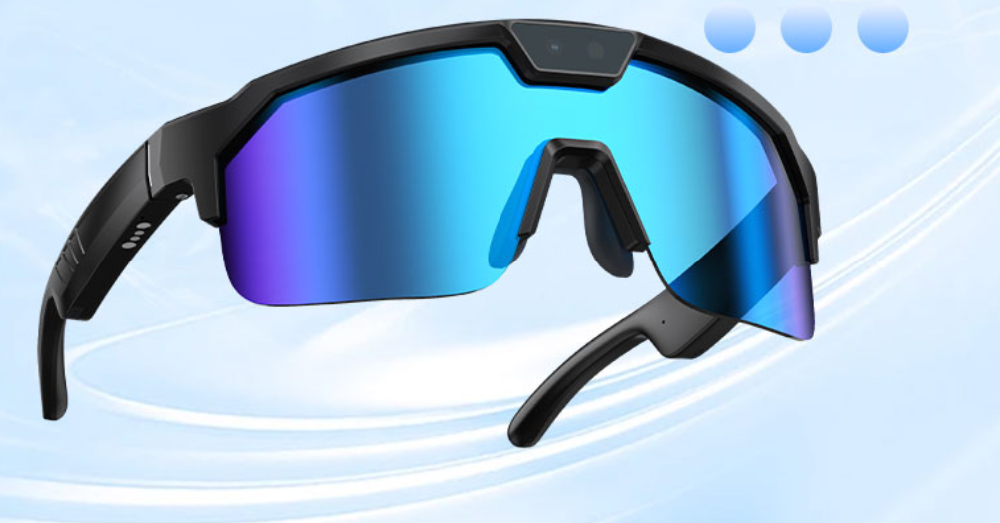
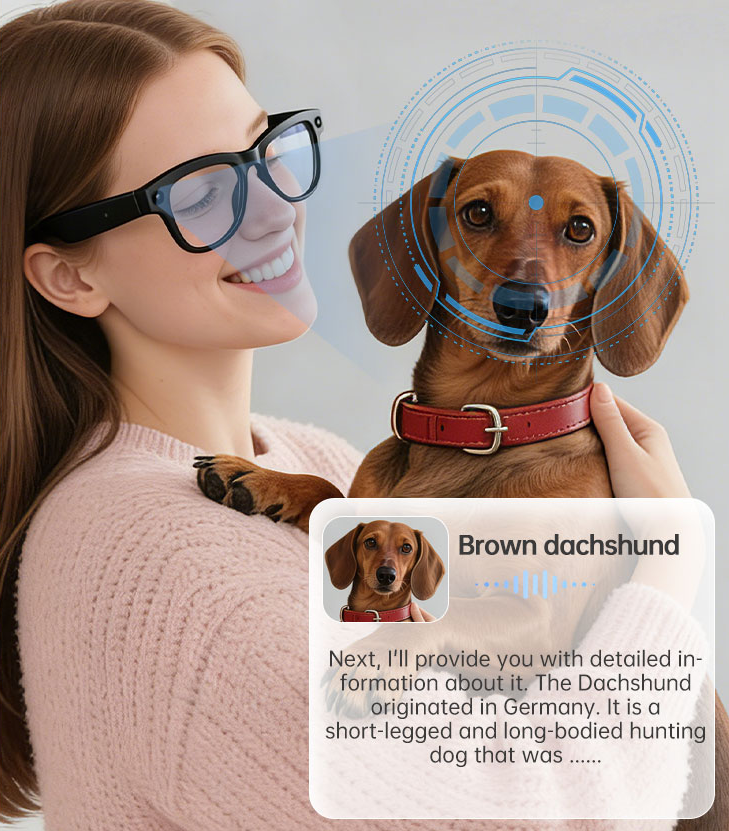
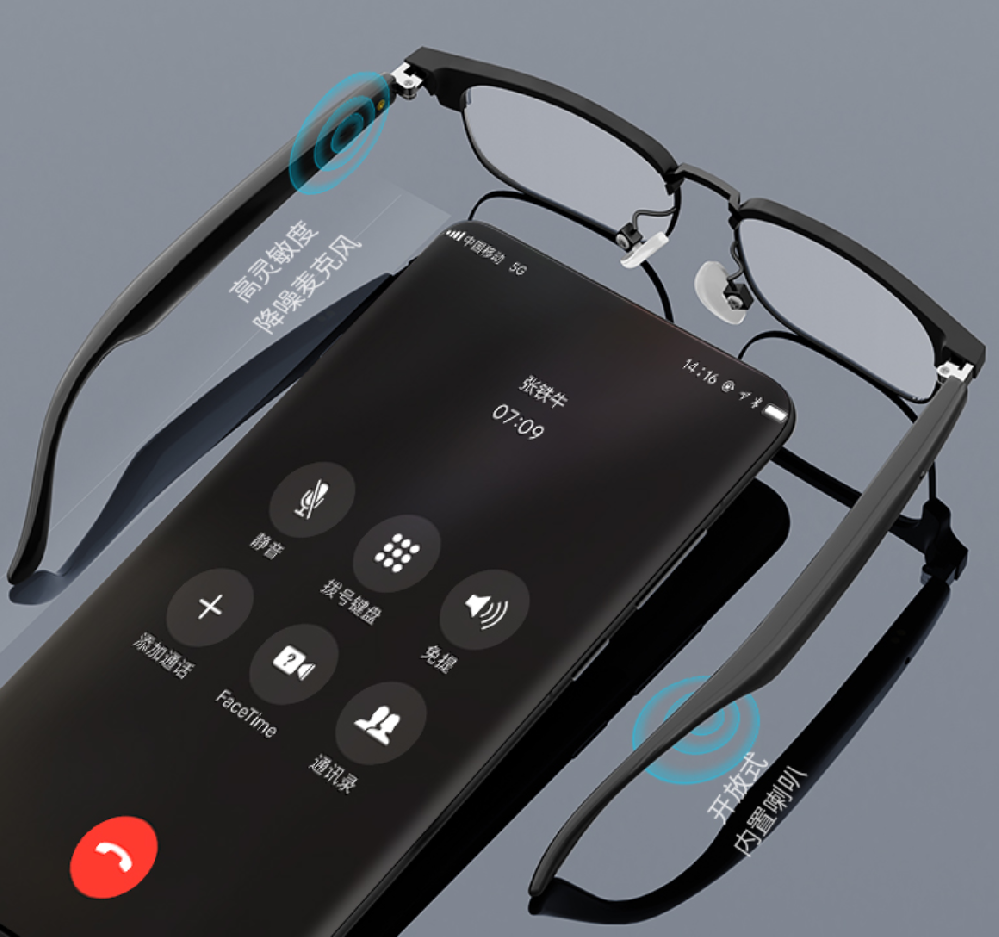
Modern smart glasses derive their functionality from the combination of low-power hardware and cloud-based Large Language Models (LLMs). While the frame provides the microphone array, acoustic playback, and BLE connectivity, the mobile application acts as the intelligent bridge routing voice prompts to AI engines like OpenAI’s GPT-4o, Anthropic Claude, or custom enterprise APIs.
This article details the software architecture, audio pipelines, and SDK integration methods required to build a seamless Voice AI smart eyewear experience.
1. System Communication Architecture
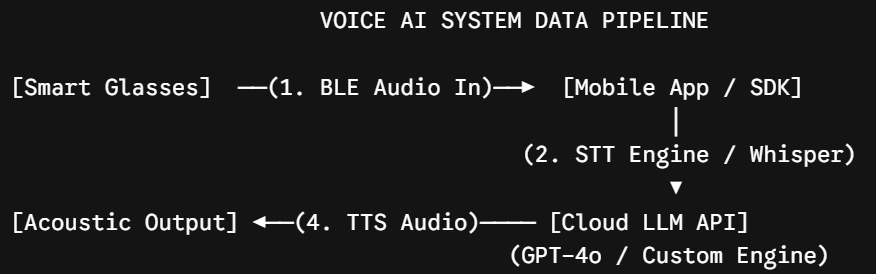
The audio processing pipeline follows four main steps to achieve real-time voice interactions:
Audio Capture & Noise Suppression: Dual microphones capture speech while hardware-level ENC suppresses ambient noise. Audio data is compressed via the AAC or LC3 codec and streamed over Bluetooth low energy (BLE).
Speech-to-Text (STT): The mobile app receives the audio stream and passes it to an STT engine (such as OpenAI Whisper or Google Cloud Speech-to-Text).
LLM Processing: The transcribed text prompt is transmitted via RESTful API or WebSockets to the target language model.
Text-to-Speech (TTS) & Playback: The AI response is converted back into high-definition speech using natural-sounding TTS engines (e.g., ElevenLabs) and transmitted back to the glasses speakers.
2. Overcoming Latency: Achieving Sub-Second Response Times
In conversational AI, high response latency breaks user engagement. Standard round-trip voice calls can take 2 to 3 seconds if unoptimized.
Optimization Strategies Implemented in Modern Hardware SDKs:
Streaming Audio Responses: Utilizing WebSocket connections instead of HTTP POST requests allows the app to begin TTS audio playback while the LLM is still generating text.
Low-Latency Bluetooth Codecs: Utilizing BLE Audio LC3 codecs reduces wireless transmission delay by up to 50% compared to traditional SBC codecs.
Local Wake-Word Detection: Running lightweight local wake-word algorithms on the hardware DSP minimizes unnecessary battery consumption by activating the full cloud pipeline only when prompted.
3. Key Software Features Supported by Open SDKs
Brands developing proprietary mobile software for smart frames can leverage factory SDKs to access core hardware functions:
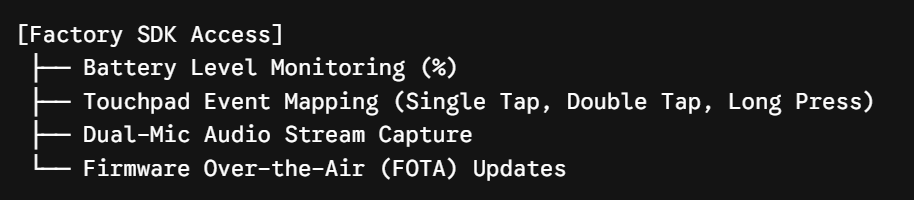
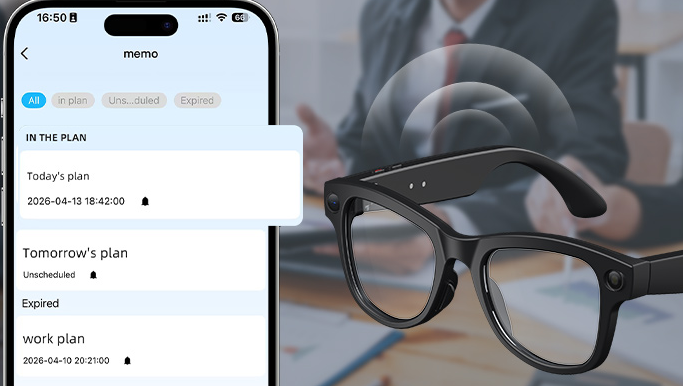
Touch Control Re-Mapping: Assigning touch events (e.g., long press on the right temple) to trigger specific app actions, such as instant voice translation, voice memo recording, or AI assistant wake-up.
FOTA (Firmware Over-The-Air) Updates: Pushing wireless DSP tuning updates, battery optimizations, or new gesture controls directly to end-users' glasses without physical service.
Software Integration Options for B2B Clients
| Integration Path | Development Effort | Time to Market | Customization Level |
| Turnkey White-Label App | Zero Coding Required | Immediate (1-3 Days) | Brand Logo, Color Scheme, Basic API Choice |
| Custom SDK Integration | Medium (iOS/Android Dev) | 3 – 5 Weeks | Full Control over UI, Features, and LLM Logic |
| Enterprise API Bridge | Advanced (Backend Team) | 4 – 8 Weeks | Direct Connection to Private Enterprise ERP/Data |
💻 Developing your own software application for smart glasses?
We provide comprehensive iOS and Android BLE SDKs, developer documentation, and sample code to accelerate your software integration.